
Compare Saline County Property Value Types
The county record separates value ideas that are easy to blur. Market value is the Appraiser's estimate of what a parcel is worth. Assessed value follows after the Kansas assessment rate is applied. That estimate covers the property's actual-use class. A sale price or consideration clue sits in the transaction record. It is not the same as either mass-appraisal number.
| Value | What It Is | Where |
|---|---|---|
| Appraised or market value | The county estimate based on market evidence or a statutory special-use method | Appraiser Parcel Search and card |
| Assessed value | Appraised value multiplied by the class assessment rate | Appraiser and Treasurer tax detail |
| Sale or consideration evidence | A transaction amount or clue from a recorded instrument, when publicly shown | Recorded deed or permitted public field |
| Land and building values | Components that make up the total appraised figure | Parcel detail current and previous groups |
Kansas sets the order plainly: appraised value times the assessment rate equals assessed value. Tax then equals assessed value multiplied by the mill levy and divided by 1,000. This page stops at the value numbers. The Saline County property tax guide covers bills, payment status, and appeals.
Date every figure before comparing. A current appraised estimate, a prior assessed base, and an older sale price can all be accurate. Each one describes a different moment. Label the record year, property class, land component, building component, total, and transaction date. Bare amounts placed side by side invite bad conclusions.
Kansas Rates Shape Saline County Property Value
The assessment ratio hinges on actual use, not zoning or an owner's plans. Kansas Department of Revenue materials list the classes: residential at 11.5 percent, commercial and industrial at 25 percent, agricultural land at a 30 percent use-value rate, vacant lots at 12 percent, nonprofit property at 12 percent. Public utility property sits at 33 percent. Other property comes in at 30 percent. Mixed-use parcels can be split.
A quick example clarifies the math without valuing any real parcel. Multiply an appraised figure by its class rate. That product is the assessed base. Change the class or split the uses. That base shifts even when the full appraised estimate stays the same.
Agricultural land shows why the ratio is not the whole story. Its rate applies to a use value rather than market value. Residential and commercial classes generally begin with market appraisal concepts. Two tracts of similar acreage should not be compared. Actual use, class, and land method must be known first.
Note: Confirm the current class and rate in official Kansas material before using any assessed figure for a real decision.
Find a Saline County Property Value Record
The Saline County Appraiser Parcel Search is the direct source for a property value record. It supports searches by address, owner, Quick Ref without the "R," property description, neighborhood code, acreage, year built, and appraised-value range. Tie every result back to the right situs and legal description before comparing values.
- Accept the portal's list-use certification and search the exact situs address or a known parcel identifier.
- Match the legal description, Quick Ref, Tax ID, or property number so a similar address does not supply the wrong card.
- Record the year and the current and previous land, building, and total appraised fields.
- Note the assessment class, then consult the deed only when a public sale clue is relevant to the comparison.
- Appraised value
- The county's market estimate or statutory special-use value before the class rate.
- Assessed value
- The result after applying the property's classification assessment rate.
- Assessment ratio
- The percentage assigned under Kansas law to the property's actual-use class.
- Reassessment
- The process of analyzing current evidence and setting a new annual value.
The search updates each Sunday. Current-year appraised figures and tax information based on a prior assessed value can sit in the same system. Label both the year and the value type. When an address returns several matches, compare the legal description and identifiers before reading any value. Neighborhood and value-range filters narrow results. The assessor Neighborhood field is a valuation classification, though, rather than proof of a subdivision. Parcel identity comes first.
Read Saline County Property Value Components
The official parcel-card layout splits current and previous appraised values by class, land, building, and total. Market-land fields cover method, type, effective frontage, and depth, alongside dwelling and improvement details. Those fields describe appraisal inputs. They are classifications, not a private inspection. View the county's official sample parcel detail to see the layout the county publishes.
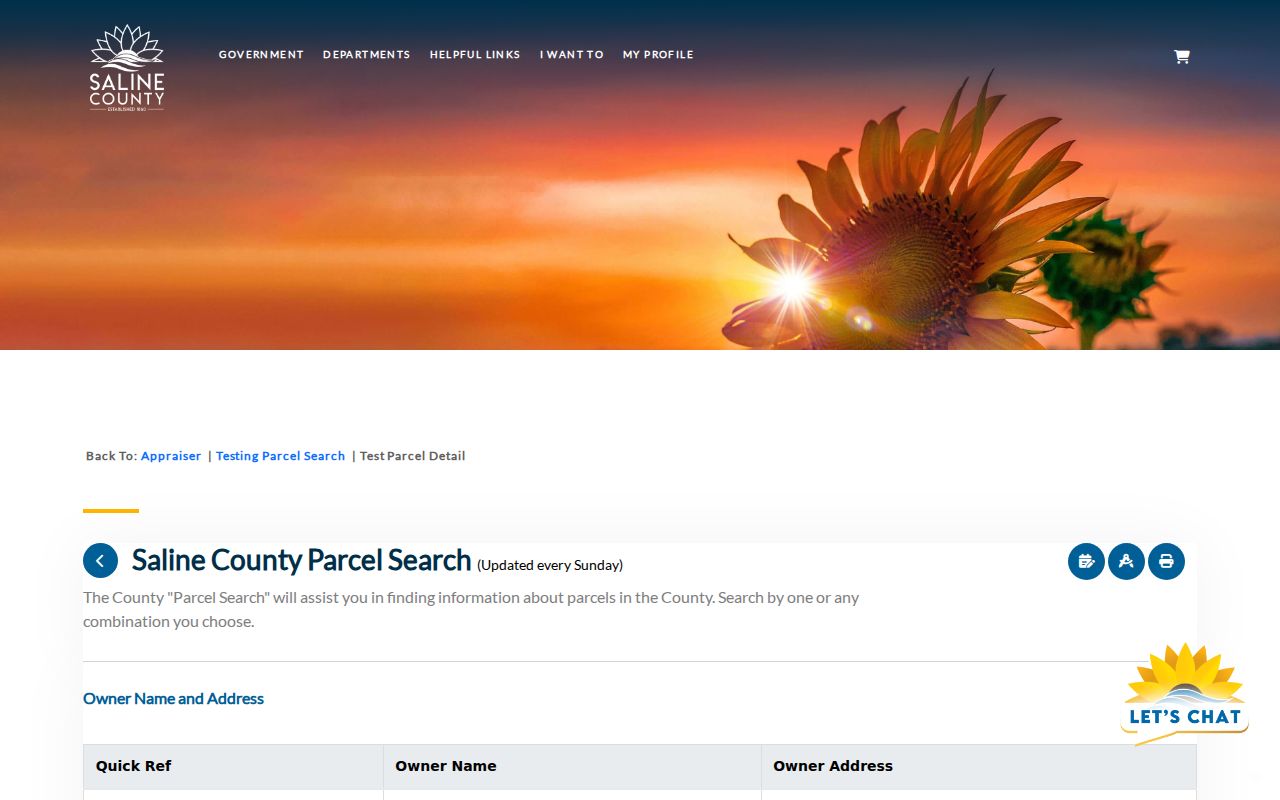
The display shows how identity, owner, situs, and appraisal groups are arranged. The sample values are test data. They make no claim about a real Saline County property value.
A blank field may simply mean a feature does not apply. It does not mean the property lacks value. Preserve the field label. Preserve the source date rather than guessing what an empty box means.
How Saline County Builds a Property Value Estimate
The Appraiser first discovers and lists taxable and exempt real and personal property. It then values that property uniformly under Kansas law. County material says staff review recent real-estate sales and local conditions every year. Appraisers analyze market transactions. They do not create the market.
The county's tax-process material describes market, cost, and income approaches. State law requires an exterior view or inspection every six years. Which approach carries the most weight depends on the property and the evidence available. A single sale does not set market value by itself. So one isolated transaction should never stand in for the county's full analysis.
Note: Compare like property classes and the same valuation date; a mixed-use or special-use parcel may follow a different assessment path.
The 2026 Saline County Property Value Date
Saline County set its 2026 values with January 1, 2026 as the valuation date. That date comes from the county's March 17, 2026 notice. The same notice gave taxpayers until March 31 to request an informal hearing with the Appraiser. Those hearings usually run about 20 minutes by telephone. Treat the dates as part of that single notice, not a standing annual schedule. The market-study material released in February 2026 showed a countywide residential inflationary trend. Commercial and vacant land trends held stable. One parcel can still move against the countywide direction. So any comparison should go back to the parcel card, its class, its features, and the market evidence behind the appraisal.
Sale Evidence Has a Saline County Property Value Boundary
A recorded deed in Saline County may hint at consideration, but the deeper transaction detail sits elsewhere. Kansas Sales Validation Questionnaires are never filed of record. The county keeps each one for five years, and K.S.A. 79-1437f restricts access to specified officials and participants. A public searcher should not expect the questionnaire to ride along as a deed attachment. The split matters. Validated sales can feed the Appraiser's market analysis through fields the public never sees, while the deed itself documents only the conveyance. Compare properties using what the public record actually displays.
Why Saline County Property Value Records Differ
Two county systems can show values from different moments. The Treasurer's tax-detail route lists assessed value, mill levy, and distribution. It also covers tax, paid and delinquent status, plus parcel and legal-description fields. The parcel portal, in turn, highlights current-year appraised values. It sits alongside tax information built on a prior assessed value. Timing alone can place figures from different stages or years next to each other. Use the Saline County tax-detail source only to verify the assessed base and its year. That page notes its external detail system is not maintained by Saline County. So date the result and take valuation questions to the Appraiser.
What Saline County Property Value Cannot Predict
An assessor figure exists for the public valuation system. It cannot promise what a buyer will pay, what a lender will accept, or what a licensed appraiser will conclude for a given date and purpose. Physical condition, transaction terms, market timing, and facts outside the parcel card can all shift a private opinion of value.
Value is not price. Saline County assessed value supports taxation. It is neither a sale-price prediction nor a parcel-specific appraisal.
Use the record to understand Saline County's figure and compare years on the same basis. For a transaction decision, get qualified advice and current property-specific evidence. The tax record is not a market guarantee.