
Start a Saline County Search
An address question almost always begins with the Saline County Appraiser Parcel Search. Owner and situs details work. So do the Quick Ref ID, class, style, bedrooms, and other property traits. A good result hands you the identifiers every other system needs. Working from just a name? Try surname spellings first. Then compare legal descriptions before assuming two similar rows describe the same land.
The right office depends on the goal. Assessment questions go to the Appraiser. Recorded ownership and liens belong with the Register of Deeds. The Treasurer holds tax balances and payment history. Boundaries and neighboring parcels show up in GIS. Mapped tax lines are never a survey, though. Treated together, these Saline County property records form a cross-check rather than a title opinion.
As the property search grows, keep a small parcel passport. Record the exact situs. Note the owner mailing name and address. Log the Quick Ref, tax ID, property number, legal description, subdivision, and the date each screen was checked. Add deed references and the tax year only once the same land is confirmed across systems. That habit stops a mailing address from masquerading as the physical site. It also keeps an old parcel number from surviving a split or replat unchanged.
- Find the parcel by situs address or owner in the Appraiser search.
- Carry the legal description and owner name into the deed index.
- Match the tax ID in the Treasurer search and open the detail.
- Locate the same tract in the county GIS or ORKA viewer.
- Request copies or offline material from the office that holds it.
Saline County Records Custodians
Three Saline County offices split the land-record work between them. The Register of Deeds records and preserves deeds, mortgages, releases, assignments, liens, and plats. The Appraiser identifies each parcel and estimates value for taxation. The Treasurer keeps the tax account and payment status. All three sit in the City-County Building in Salina. Yet each answers a distinctly different question.
Saline County Register of Deeds
300 W Ash St, Room 212
Salina, KS 67401
785-309-5855
Parcel Cards Link the Systems
Think of the Appraiser result as the county's crosswalk. Search fields cover owner name, house number, street direction and name, class, style, bedrooms, basement, bathrooms, neighborhood, acreage, year built, and description. An appraised-amount range is included too. Each result row shows the Quick Reference, tax ID, and property number. It also lists the legal description, acres, neighborhood, and final values.
That depth pays off when an address has changed or a rural tract carries no familiar street label. Start broad. Then narrow down. Keep the Quick Ref ID, tax ID, and exact legal description side by side. The owner line is helpful. But it remains an appraisal-roll entry. So confirm any recent transfer in the recorded deed instead of treating the parcel card as title evidence.
The portal updates every Sunday. Save the date of each search. A fresh conveyance can reach the recorder before the appraisal name catches up. Quick Ref searches leave off the leading "R." The form accepts one field or a mix of filters. A common surname returning many rows calls for careful comparison. Match situs, neighborhood, acreage, and the full legal description rather than a quick first-match pick.
Three keys
A parcel is the mapped tax unit. The situs is the property's physical address. A legal description defines the same land by lot and block or by section, township, and range.
Saline County Deeds Online
Saline County points its public recorded-document search to iDoc Market. The service is built on accounts, subscriptions, and day passes, with separate print options. The Register of Deeds notes that deeds and miscellaneous documents were computer-entered before 1995. No precise public online-index start year is published. That statement is not a cutoff date.
Search using the names as they appeared when the instrument was recorded. Then match the legal description, recording date, document type, and book or page reference. A grantor conveys an interest; a grantee receives it. Name alerts catch later filings but validate nothing. They never watch a parcel by legal description.
The county-linked recorder landing page displays the service model and its access terms. Open the official iDoc Market source to see the current pricing and login structure firsthand.
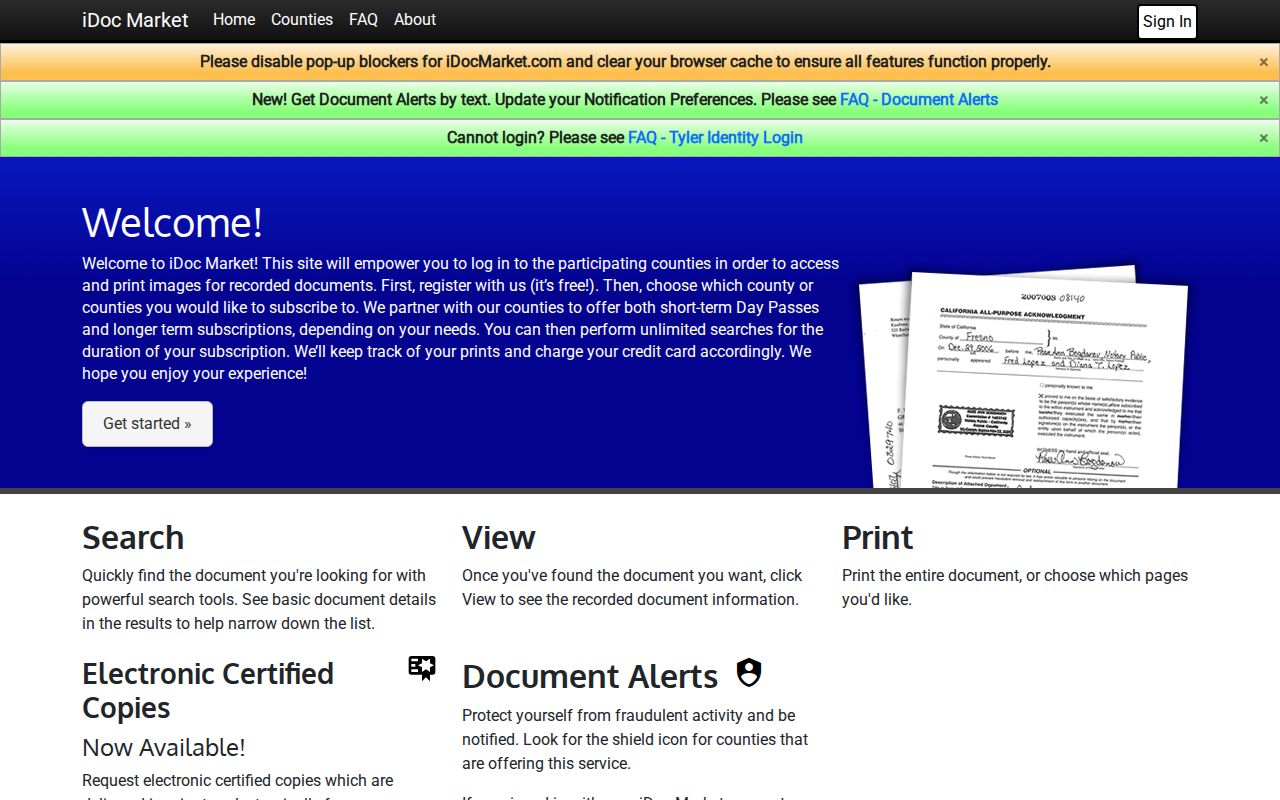
Recorded documents follow a different path than free searches.
Saline County Record Types
No single database tells the whole property story in Saline County. A transfer instrument documents the conveyance itself. The appraisal roll carries the current tax parcel and its value fields. Treasurer detail tracks the charge and each payment. Plats preserve the recorded subdivision framework. GIS gives a working geographic view. Permit or planning files may explain later physical changes.
| Record Type | What It Documents | Kept By | Access |
|---|---|---|---|
| Deeds and mortgages | Transfers and recorded claims | Register of Deeds | iDoc or office request |
| Parcel and appraisal | Owner line, traits, legal description, values | County Appraiser | Free county search |
| Tax detail | Charge, status, distribution, book and page | County Treasurer | Free county search |
| Plats and GIS | Lots, map context, nearby parcels | Register, GIS, city | Viewer, PDFs, request |
| Permits and zoning | Applications and land-use review | City or county planning | Portal or direct request |
For the recorded chain of title, use Saline County deed records. Tax and value research starts with the parcel card and Treasurer detail. A plat or GIS view adds location context, but only recorded instruments and qualified boundary work settle legal questions.
Tax Detail Has Its Own Trail
The Treasurer tax search looks up accounts by name or company. Tax ID, address, and ZIP work too. Open a hit. The detail screen shows the parcel, legal description, value, levy, and distribution. Payment status and a deed book/page reference appear there too. Those cross-links make the tax roll handy when a parcel search returns several candidates.
Timing shapes Saline County tax bills. First-half real-estate tax is due December 20. The second half comes due May 10 of the next year. The county mails no second-half statement. Status changes as payments post. Open the live account rather than trusting an old printout. View the county tax-detail source for the full field layout.
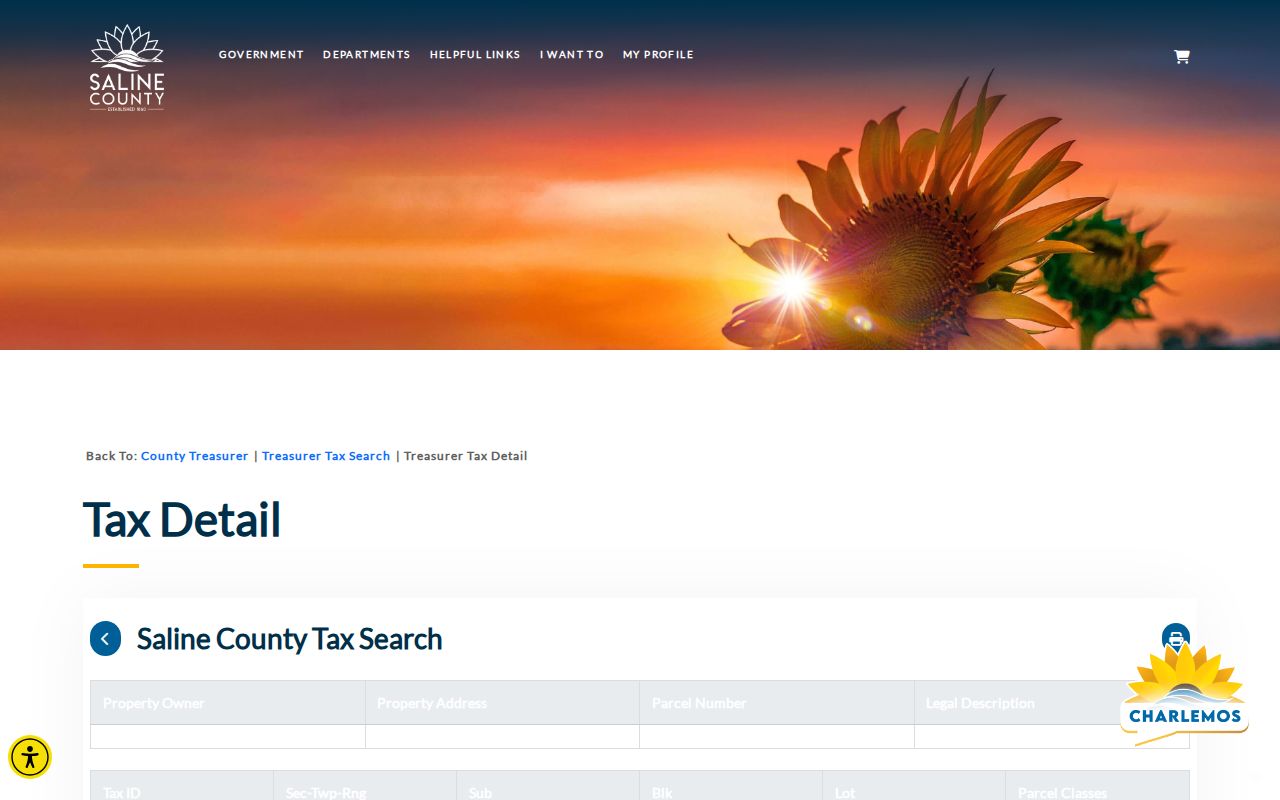
That screen shows why the tax ID and deed reference deserve a place in your notes. Carry both into the appraisal and recorder systems for cleaner Saline County property records lookups.
Saline Parcel Maps Need Context
Saline County's ArcGIS parcel experience and the companion ORKA map are good for finding tax parcels. They also help with comparing roads, tracts, and neighboring land. Remember what GIS is for. It supports reference and county operations. A mapped boundary is not a survey line.
If a map line clashes with a fence, deed, or occupation on the ground, save the parcel identifier first. Save the legal description too. Then pull the recorded plat or deed. Bring in a licensed surveyor when the position truly matters. Rural land leans on section-township-range descriptions, while platted areas use additions, blocks, and lots. Open the live county parcel-map source to test the layers yourself.
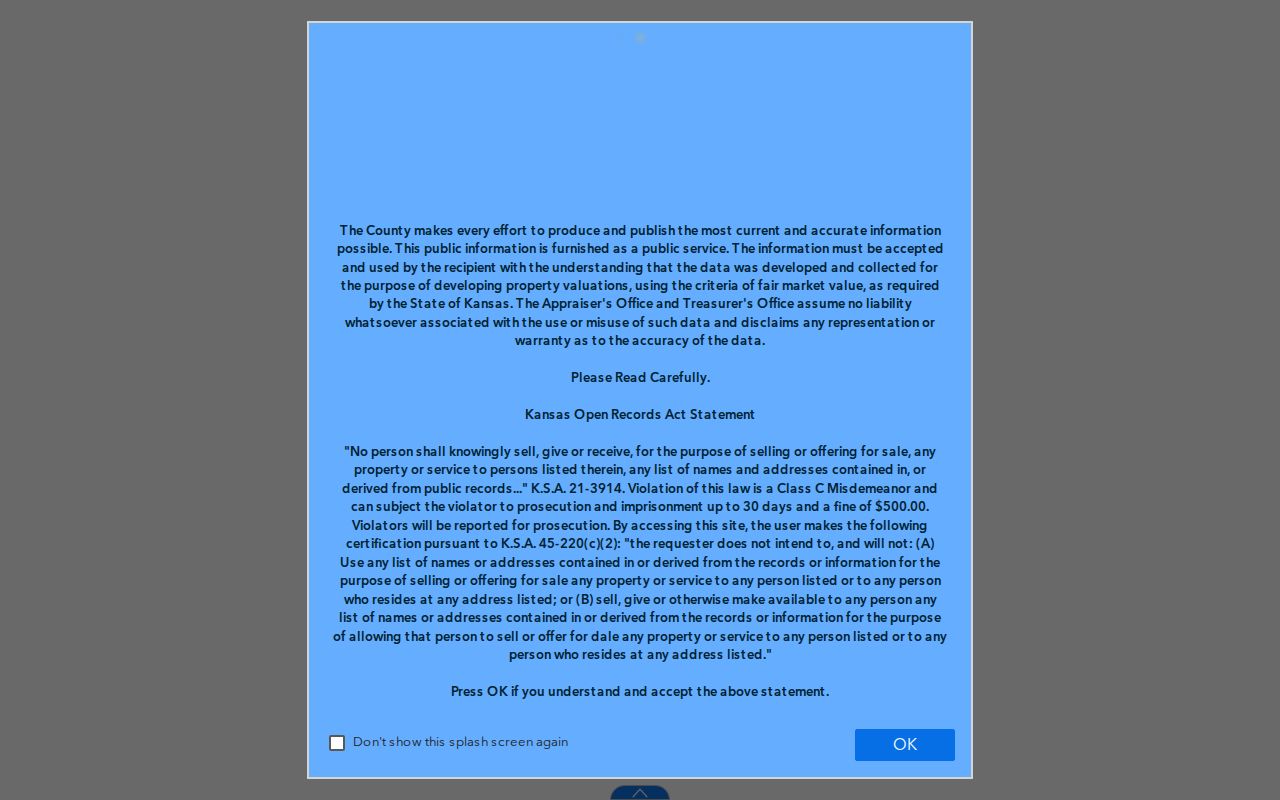
A dynamic viewer is the right place to test current layers. A static image cannot preserve every control the county map offers.
Plats Preserve Salina's Shape
Plats hold the recorded framework behind many Salina parcels. The city publishes a subdivision-plat directory covering the original townsite and later additions. That townsite plat fixes named streets, blocks, and lots. It also fixes the legal location that still decodes descriptions in old deeds.
Treat the municipal collection as a complement, not a substitute. Use the city's Subdivision Plat Directory to spot a likely plat. Then confirm recorded references with the Register of Deeds. Annexation can move land inside city limits, yet the county parcel custodian stays the same.
Rural Addresses Follow County Rules
Outside incorporated cities, Saline County's addressing code governs how roads, blocks, and structure numbers get assigned. A mailing address, a situs address, and a legal description can all differ. That gap matters when a name search fails. It also matters when a parcel sits near a municipal boundary.
Start with the base road name and drop any directional prefix. Compare the public road map against the parcel's legal description. Never force a ZIP code to settle jurisdiction. Postal geography serves delivery. City limits and parcel boundaries come from legal and GIS records.
Saline County Records Offline
Older Saline County property research spreads across several institutions. The Kansas Historical Society holds land records, maps, deed microfilm, tract books, and patents. It also keeps plat atlases. The Salina Public Library's Campbell Room adds city directories, newspaper microfilm, local indexes, and photographs. It also provides local indexes, photographs, and genealogy databases. Probate and quiet-title matters may point to the 28th Judicial District Court.
For county material with no online access, file a focused Kansas Open Records request. Name the office, record type, names, date span, parcel or legal description, and preferred format. KORA guarantees access to existing public records. It does not force an agency to create a record or answer a research question. Fees may reflect actual staff and copying costs.
Historic map snapshots add dates that current GIS cannot. The Kansas Historical Society lists Saline County plat and ownership atlases for 1884, 1903, and 1920. It also lists editions from about 1927 and about 1972. Each atlas can place an owner of record over a tract at one moment in time. Yet the deeds between editions still tell the fuller story. The Register's plat-preservation work reaches back to 1863. In that year, county plats were incubated, cleaned, repaired, and placed in new books and sleeves.
Fraud Alerts Watch Names
Saline County offers free Property Fraud Alert enrollment for names appearing in newly recorded documents. Exact name choices matter here. Enroll the common variations that appear in your deeds. The notice works as an early-warning tool, nothing more. It is not parcel-specific, does not block recording, and does not prove a filing is fraudulent.
When an alert looks unfamiliar, compare the instrument details and contact the Register of Deeds. Ordinary estate, lender, and release filings trigger alerts too. A name flag can point to a document worth inspecting, but a filing that affects title may call for legal advice.
2026 Saline Values and Reviews
The Saline County Appraiser runs yearly sales studies and market analysis, and the 2026 valuation notices draw on that work. A parcel card shows the county's tax appraisal. It is not a promised sale price. Owners who dispute a notice should follow the county's current instructions and request an informal hearing within the stated cycle.
Keep your paper trail organized from the start. File the notice, property record card, comparable evidence, and photographs under your tax ID. A value complaint belongs with the Appraiser. A payment problem belongs with the Treasurer. Mixing the two delays answers.
County material separates current appraised values from tax figures built on a prior assessed value. One sale alone does not set market value, the county explains. Check the year label and value type first. The sale-validation questionnaire holds transaction details, but K.S.A. 79-1437f limits access and keeps it only five years, so it never substitutes for a recorded deed in Saline County deed research.
Tax Foreclosure Records Cross Offices
Saline County's tax-foreclosure material walks the whole arc: process guidance, notices, redemption rules, auction steps, pending-case documents, and treatment of unsold property or proceeds. A tax-search result is only the start. Court filings and recorded instruments often settle the real status.
Read the current notice first. Pull the parcel-specific case documents too. Confirm the legal description, liens, access, and physical condition independently. Tax foreclosure does not turn a GIS line into a survey, and no summary screen guarantees that every risk appears.
Redemption, bidding, and payment rules are time-sensitive. An owner may redeem until twenty-four hours before sale, the county says, while pending-sale papers control the live schedule. A bidder or representative must attend. Payment is due at close under the published process. Unsold property and excess proceeds follow separate routes. Check each detail against the current case PDF and Treasurer information instead of copying from an older sale.
Limits of Saline Property Records
Saline County property records answer many questions well. They show the owner of record for taxation, recorded transfers, many recorded encumbrances, assessed values, taxes, and map context. They cannot tell you who occupies a home. They may lag a recent filing. A nonpublic item may be missing, and data-entry errors happen too. Kansas Safe at Home adds substitute-address and mail-forwarding protection for qualifying survivors.
A purchase, estate, boundary dispute, or possible title defect calls for comparing sources and the right professional help. A title search, legal advice, appraisal, and boundary survey each answer questions a public portal cannot.
Online coverage has limits of its own. The recorder index has no posted start year. A saved GIS image drops some live controls. Older deeds, plat books, probate files, and local-history sources may need a counter visit, copy request, court inquiry, library search, or Historical Society catalog check. A blank portal result means try the documented fallback. It does not mean no record exists.
Put dates and custodians in every citation. Note whether a name came from the Sunday-updated appraisal roll, a recorded deed, a tax-year detail, or a historic atlas. That small habit keeps current ownership, past ownership, assessment, tax status, and occupancy from collapsing into one unsupported claim about a Saline County parcel.
Use records with care. Saline County property records support lawful diligence and civic research, never harassment; they are not a title search or licensed survey.